
DEQ Wants Every Pumper in North Carolina to Know These 7 Things
The Septage Program just sent out its annual guidance to training providers. Here's the plain-English version — what's changing, what gets firms in trouble, and the deadlines you can't afford to miss.
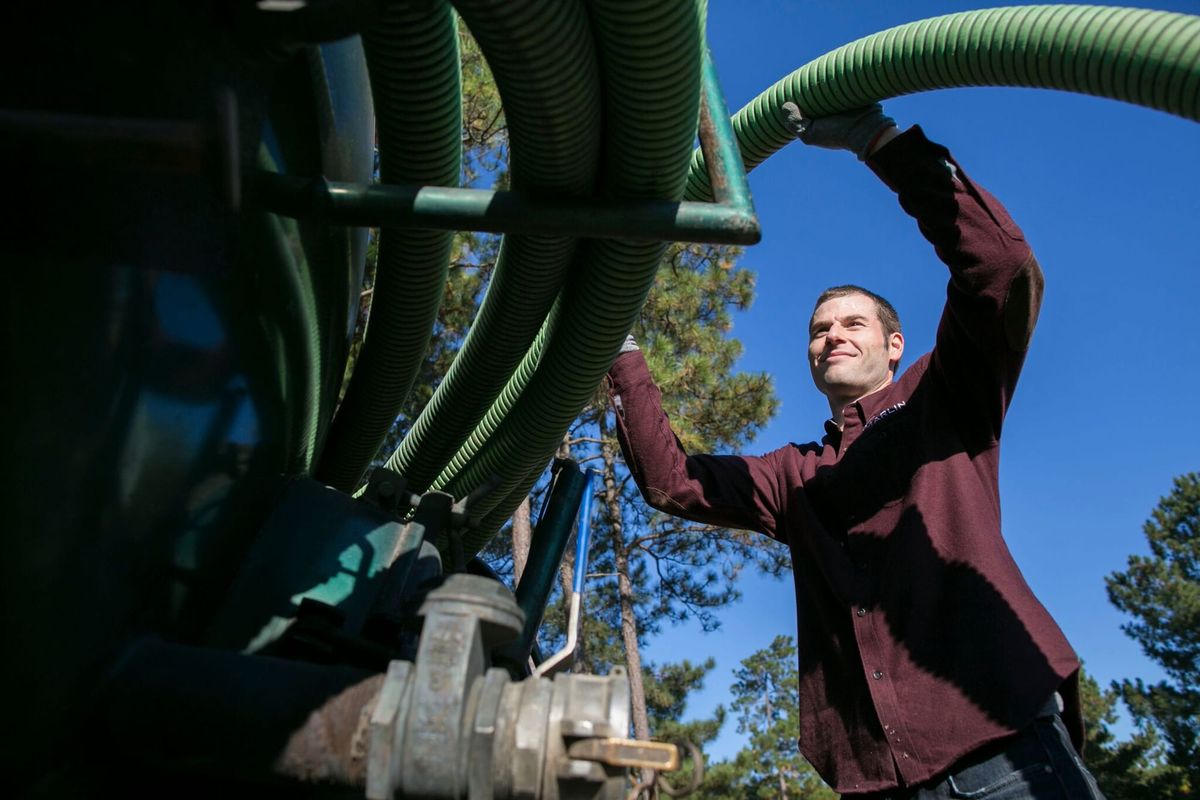
Earlier this month, the NC Division of Waste Management's Septage Management Program sent a memo to continuing education providers across the state — including Onsite Wastewater Professionals — asking us to make sure the septic industry hears a handful of key compliance messages loud and clear. We read the whole thing so you don't have to. If you pump, haul, place portable toilets, or operate a land application site in North Carolina, here's what the state wants you to know.
1. Permit renewal season is a hard deadline and the late fee is steep
If you take one thing from this article, make it this:
- Renewal window: October 1 – December 31, every year
- Complete applications and payment due: December 15
- Miss it, and the late fee is 50% of your annual permit fee
That's not a typo. An incomplete submittal or unpaid invoice after December 15 costs you half your permit fee again in penalties. Renewal emails and invoices start going out in October — don't let one sit in a spam folder.
2. Pump logs are the #1 thing inspectors flag
According to DEQ, incomplete pump logs and operational records remain one of the most common compliance deficiencies found during inspections. It's an easy violation to avoid.
Every pumper's log needs five things for every job:
- Date
- Type of septage
- Quantity
- Pumping location — a street address for tanks, a route for portable toilets
- Disposal location
A couple of details worth knowing: firms that only place portable toilets — no pumping, hauling, or disposal — don't have to keep pump logs. And while the state hasn't set a formal record retention rule for septage firms, DEQ recommends keeping records for at least five years as a best practice. SDTF and SLAS operators should keep permit-required records for the full life of the permit, plus five years after it expires.
3. Adding a truck? Tell the state before it hits the road
This one catches growing firms off guard. Before a new pump vehicle goes into service, you must:
- Submit the New Pumper Vehicles Form to notify septage staff
- Make sure the vehicle meets all rule requirements, including the lettering requirements under 15A NCAC 13B .0832
- Then — and only then — put it in service
Septage staff will generally schedule a formal inspection within 10 business days, and additional permit fees may apply if your fleet size increases. The same "notify first" principle applies to changes in license plates, VINs, and discharge locations.
4. Ownership or contact changes? Report them promptly
Any change in ownership, operator, or contact information for a permitted firm, Septage Detention and Treatment Facility (SDTF), or Septage Land Application Site (SLAS) should be reported to the Septage Program using the Firm Ownership / Contact Information Changes Form. Some changes trigger a permit modification or a brand-new permit — so report early rather than finding out at inspection time.
SDTF and SLAS operators should also notify the Program before adding or removing treatment or storage tanks, or adding or removing permitted land application fields. These changes may need Division review and approval before you make them.
5. Land application sites: soil sampling every two years
If you operate a SLAS, the reminders are straightforward:
- Soil samples for each field at least once every two years
- Samples must cover the required nutrient and metal parameters
- Send copies of the sampling and analytical results to the Septage Program inspector assigned to your county so they land in your permit file
And a reminder on disposal in general: septage may only be treated and disposed of at approved wastewater treatment plants or Department-permitted facilities — SDTFs and SLASs. DEQ maintains a current list of approved disposal locations if you need one.
6. Spills and accidents: 24 hours to report
Operators must report spills or vehicle accidents to Septage staff within 24 hours. The Program has developed a Septage Spill Notification Form to make reporting easier and to document the incident properly.
One more layer people miss: depending on where a spill happens, the Division of Water Resources may also need to be notified. DWR coordinates cleanups for sewage spills and discharges that threaten surface waters. When in doubt, contact your DWR regional office and ask.
7. Know your continuing education requirements
State law sets annual continuing education hours for the septic industry's regulated operators:
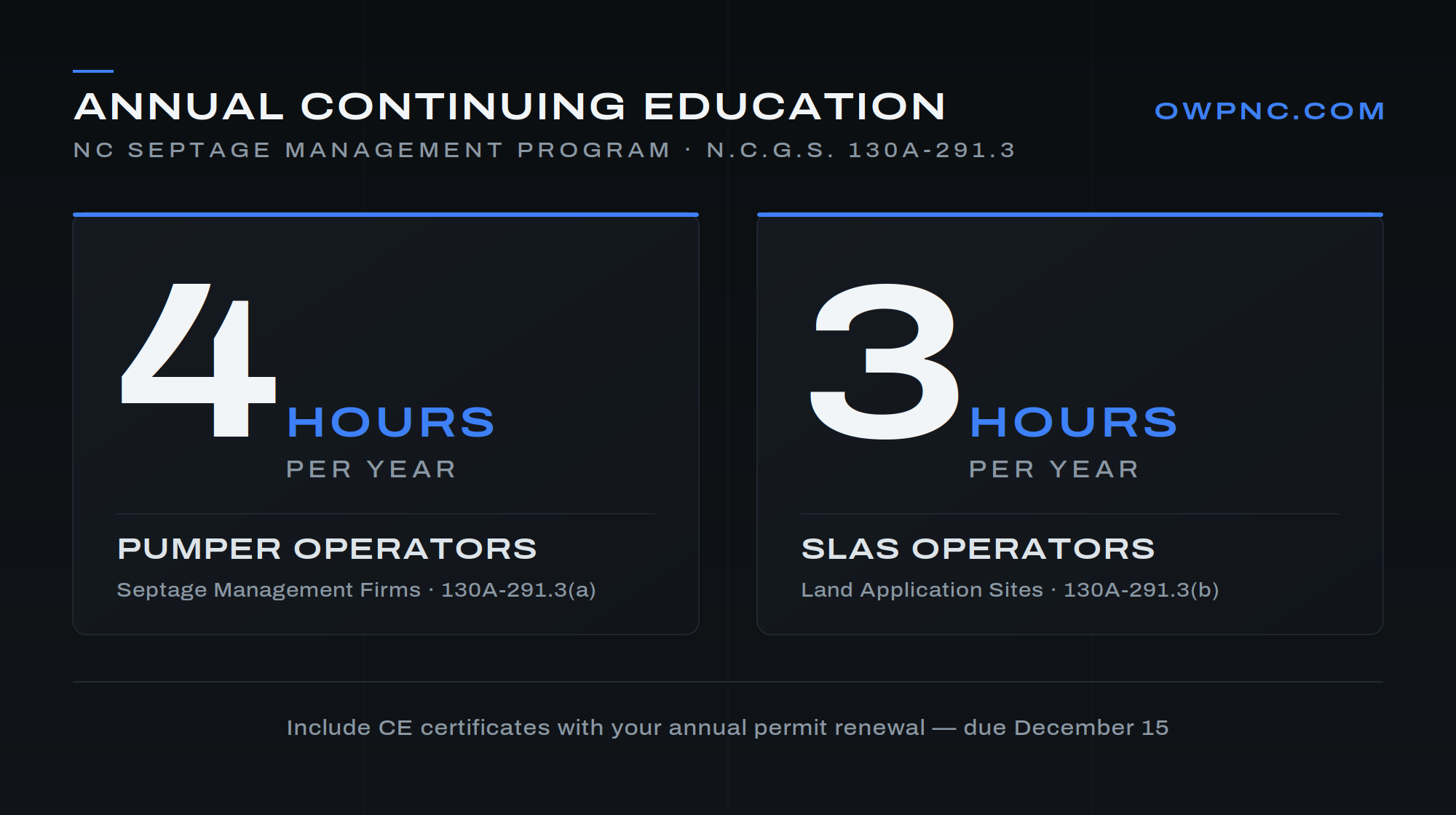
Include your CE certificates with your annual permit renewal application. An important distinction from the memo: the Solid Waste Section conducts New Operator Training for anyone seeking to become a permitted septage operator — but the Division does not provide annual continuing education courses. Those come from approved providers.
That's where we come in. Onsite Wastewater Professionals is an approved continuing education provider, and our classes are approved for continuing education for both pumpers and land application operators.
Renewal season is coming
Get your CE hours done before December 15
OWP classes are state-approved continuing education for pumpers (4 hrs) and land application operators (3 hrs). Register now and walk into renewal season with your certificate already in hand.
View Upcoming Classes →Who to call at the state
The Septage Program asked us to remind everyone where questions should go:
General questions & assistance: the Septage staff member assigned to your county, or Perry Sugg, Branch Head — the Septage Program Staff County Assignment Map shows who covers your area
Firm permitting (pumpers & non-pumpers): Tiffany Oakley
SLAS and SDTF permits: Jeff Bullard & Lee Sorrell
The Solid Waste Section's Septage webpage has also been updated with regulations, program guidance, staff contacts, permit applications, training information, and every form mentioned in this article — it's worth bookmarking, along with the Septage Management Firms page where the renewal applications and firm materials live.
Questions about continuing education requirements or upcoming OWP classes? Reach out — we're here to keep North Carolina's septic industry trained, compliant, and ahead of the deadlines.