
NC Lawmakers Approve Limited Plumbing License Exemption for Manufactured Home Sewer Connections
A new NC plumbing license exemption may allow septic installers to connect manufactured homes to existing septic systems. It creates opportunity, but also new risks for tank penetrations, inspections, and accountability.
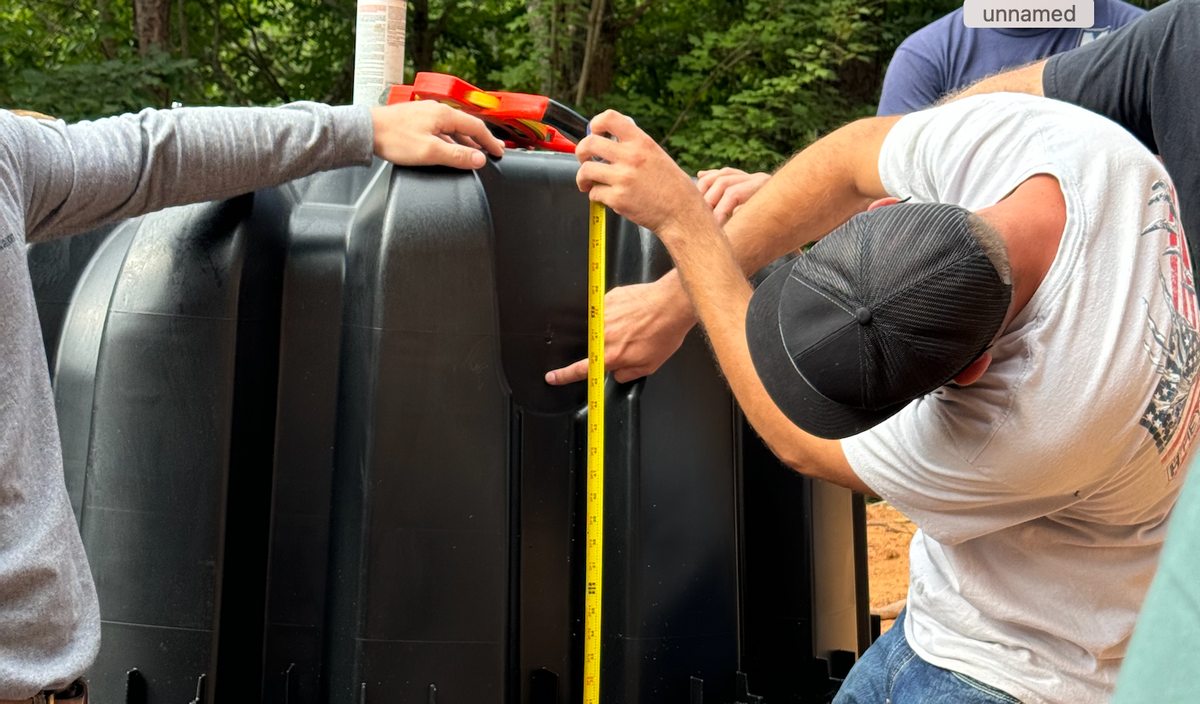
Senate Bill 445 could create new opportunities for septic installers—but it also raises important questions about tank penetrations, responsibility, and inspection
North Carolina lawmakers have approved legislation that would remove the plumbing-license requirement for certain short water and sewer connections serving manufactured homes.
The change is contained in Senate Bill 445, the Regulatory Reform Act of 2026. Section 47 of the final conference report would amend G.S. 87-21 by creating a limited exemption from the State’s plumbing contractor licensing requirements.
For the onsite wastewater industry, the change could create an opportunity for septic installers to complete the final sewer connection between a manufactured home and an existing septic system without requiring a separately licensed plumbing contractor.
But the exemption is not limited to septic installers.
As written, it applies to “a person” who meets the specified conditions. That means the same provision that opens this work to qualified septic professionals may also allow individuals with little or no onsite wastewater experience to perform it. That trade-off makes proper tank preparation, clearly assigned responsibility, and meaningful inspections more important than ever.
What the proposed exemption allows
The exemption would apply to a sanitary sewer line serving a manufactured home when all of the following conditions are met:
- The sewer line is three or four inches in diameter.
- It does not exceed 10 linear feet.
- It connects the manufactured home to an existing septic tank, existing building sewer, or another approved wastewater-system connection point.
- The work does not include designing, installing, repairing, relocating, expanding, replacing, or altering the septic tank, drainfield, distribution box, pump tank, or another wastewater-system component.
- The materials and installation methods comply with the North Carolina State Building Code, manufactured-home regulations, and the State’s onsite wastewater laws and rules.
- All required permits and inspections are still obtained.
- The sewer line remains uncovered until it has been inspected and approved by the authority having jurisdiction.
The final bill also contains a separate exemption for certain manufactured-home water lines of up to 100 feet between an existing water meter and the home.
What this means for septic installers
If the bill becomes law, a septic installer would not necessarily need a plumbing license merely to make a qualifying sewer-line connection between a manufactured home and an existing wastewater connection point.
That could allow septic contractors to provide a more complete service on manufactured-home projects. Instead of waiting for a plumbing contractor to mobilize for a connection involving only a few feet of pipe, the septic installer already working on the property could potentially complete the connection.
That may offer several practical benefits:
- Fewer scheduling delays.
- Better coordination between the building sewer and septic system.
- A clearer point of responsibility.
- An additional service opportunity for septic contractors.
- Less dependence on a separate trade for a very limited scope of work.
However, the exemption only removes the plumbing-license requirement for the defined work. It does not eliminate applicable permits, inspections, construction standards, or restrictions on altering the wastewater system.
The exemption applies to more than licensed septic installers
The bill does not say that only a certified septic installer, manufactured-home installer, general contractor, or other specifically qualified professional may perform the work. It says that the plumbing licensing law does not apply to a person who performs the connection under the listed conditions. That distinction is important.
A septic installer who understands tank elevations, inlet locations, pipe slope, watertight connections, bedding, settlement, and wastewater flow may be well positioned to complete this work properly. But the exemption could also allow the work to be performed by someone who has little familiarity with septic tanks or onsite wastewater systems. Removing the plumbing-license requirement does not guarantee that the person making the connection understands how the building sewer interacts with the permitted wastewater system.
The tank penetration may not be included in the exemption
One of the most important issues is whether the exemption authorizes an unlicensed person to create a new penetration through the wall of a septic tank. The legislation permits the sewer line to connect to an existing septic tank. At the same time, it expressly states that the exempt work cannot include the alteration of the septic tank or any other wastewater-system component.
Cutting, drilling, or otherwise creating a new opening in a septic tank could potentially be considered an alteration of the tank. At minimum, the language creates a question that regulators and local inspection departments should address before the exemption is implemented.
The safest and most defensible practice would be for the septic installer or tank manufacturer to provide a properly located, sealed, and approved inlet connection or pipe stub before the final sewer line is installed. The person installing the short building sewer could then connect to that established point without cutting into or altering the tank itself.
Why the tank connection matters
The connection between the building sewer and septic tank may appear simple, but mistakes at this location can compromise an otherwise properly designed and installed system.
Problems may include:
- A tank penetration made at the wrong elevation.
- Improper pipe slope.
- A connection that does not align with the tank inlet or baffle.
- Damage to the tank wall during drilling or cutting.
- An opening that is not sealed watertight.
- Surface water or groundwater entering around the pipe.
- Wastewater leaking from the connection.
- Poor bedding that allows the pipe to settle or separate from the tank.
- A connection covered before anyone verifies the work.
Some of these problems may not become apparent until the ground settles, the home becomes occupied, or the system begins experiencing backups or excessive infiltration.
Our industry already sees improper tank connections made by tradespeople who are unfamiliar with septic-system construction. Expanding the number of people legally permitted to perform this work could increase that risk unless the limits of the exemption are clearly understood and inspections are consistently performed.
The better approach: give the sewer-line installer a pipe to connect to
Septic contractors should consider completing the tank penetration as part of the wastewater-system installation and leaving a properly installed pipe stub for the building sewer connection.
That approach provides a clean division of responsibility:
The septic professional is responsible for:
- Locating the tank inlet.
- Establishing the proper elevation.
- Making or verifying the tank penetration.
- Installing the inlet seal or boot.
- Protecting the tank’s structural integrity.
- Providing a defined wastewater-system connection point.
The person installing the building sewer is responsible for:
- Connecting the manufactured home to the provided pipe stub.
- Maintaining the required slope and alignment.
- Using approved materials and fittings.
- Supporting and bedding the pipe properly.
- Leaving the work exposed for inspection.
This is preferable to delivering a tank with no prepared inlet and leaving someone unfamiliar with the tank to determine where and how to penetrate it.
Permits and inspections still apply
The exemption does not eliminate regulatory oversight.
The work remains subject to all required permits and inspections, and the line cannot be covered or backfilled until it has been inspected and approved.
The challenge will be determining which authority is responsible for inspecting each part of the connection.
In some jurisdictions, the building inspector may view the sewer line as plumbing work, while the local health department focuses on the septic tank and drainfield. That division can leave the actual interface between the two systems in a regulatory gray area.
Local authorities should clarify:
- Who approves the wastewater connection point.
- Who inspects the tank penetration.
- Whether a new tank penetration is outside the licensing exemption.
- Whether the septic installer must complete or approve the penetration.
- What sealing methods are acceptable.
- Which inspector verifies pipe slope, bedding, fittings, and support.
- Who documents approval before the line is covered.
- What happens when the building location does not align with the permitted system.
The bill’s inspection requirement is meaningful only when the responsible agency understands what it is inspecting and accepts responsibility for the final connection.
An opportunity with a trade-off
This legislation could be beneficial for the onsite wastewater industry.
It may allow septic installers to offer a more complete service, reduce project delays, and ensure that short manufactured-home sewer connections are completed by someone who understands the wastewater system. But the exemption is broader than the septic industry. It may also allow unlicensed and potentially inexperienced individuals to perform the same work. That makes it increasingly important for septic professionals to establish the wastewater connection point themselves rather than leaving the tank penetration to whoever arrives later. The legislation may simplify who is legally allowed to install a short section of pipe. It does not make the technical details of that connection any less important. In fact, it may make good system design, clear responsibility, and thorough inspection more important than ever.