
Two Falls in One Week: The Access Point Is the Most Dangerous Part of the System
In the span of four days this July, two people fell into septic tanks in two different states.
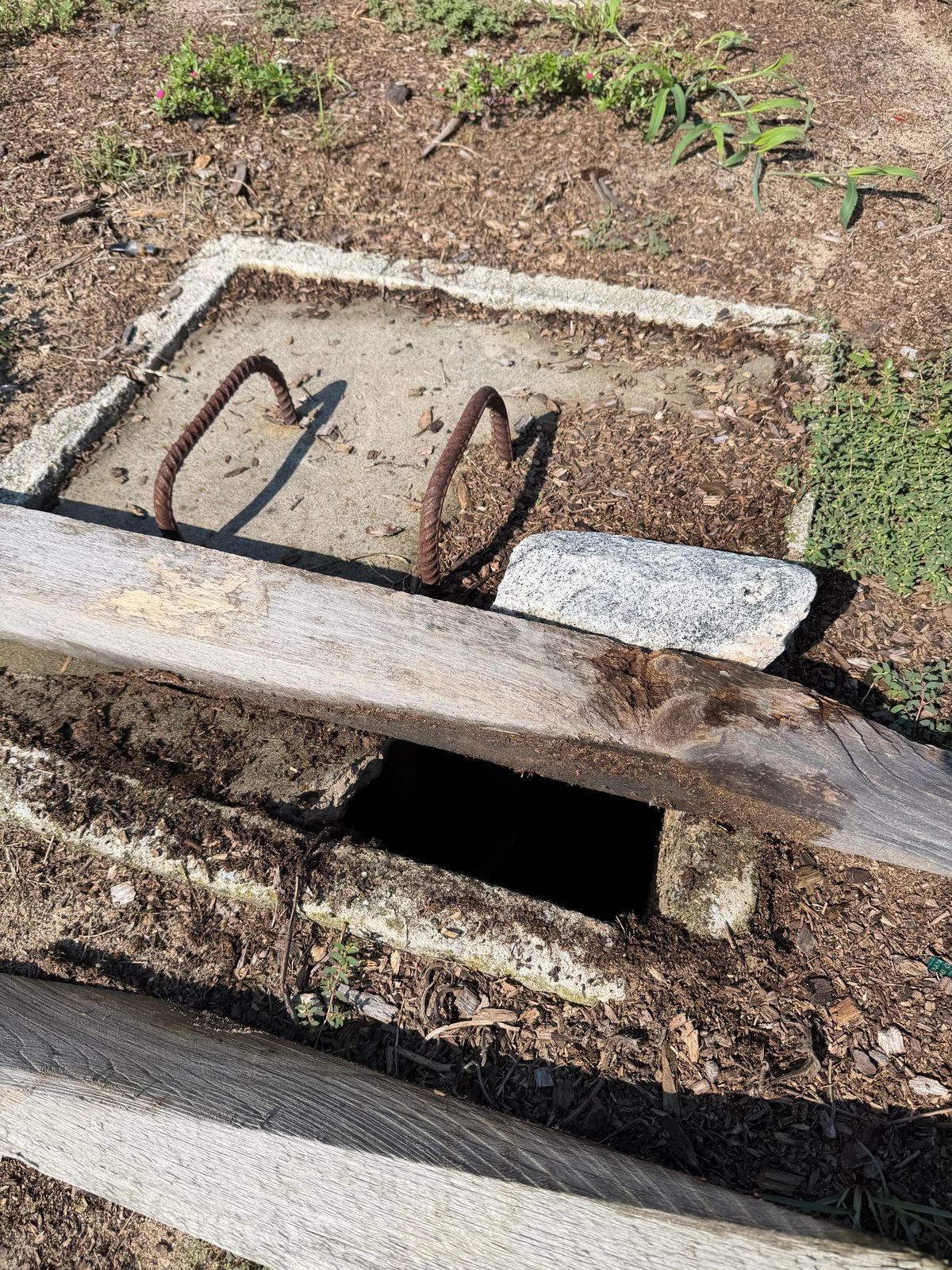
In the span of four days this July, two people fell into septic tanks in two different states. On the evening of July 26, first responders in Millerton, New York pulled a three-year-old boy from a septic tank on the grounds of a local church. CPR was administered on scene, and the child was transported to a trauma center by medevac. Three days earlier, on July 23, a subcontractor working behind Santa Fe Unit School in Maury County, Tennessee fell roughly 20 feet into a newly installed, empty concrete septic tank. It took more than a dozen first responders, rope rescue equipment, and a power shutoff to extract him before he was airlifted to Vanderbilt University Medical Center.
Two different victims. Two different settings — one a finished system on a public property, one an open tank on an active jobsite. One common denominator: the access point was accessible when it should not have been.
This Is Not a Freak Occurrence
If you've been in this industry long enough, you know these stories repeat themselves with grim regularity. An estimated 50 children die each year in the United States in open or unprotected septic tanks, and many more are seriously injured. The case files read almost identically decade after decade: a lid knocked askew by a vehicle driving over it. A cover weakened by decades of UV exposure and freeze-thaw cycles that gives way under a child's weight. A lightweight plastic riser lid that flips like a trap door and settles back into place — leaving no visible trace of what just happened. An abandoned tank hidden under grass and brush on a property the new owner never knew had one.
In 2016 in Saskatchewan, a 21-month-old girl fell through the plastic cover of a septic tank at a public visitor center — a facility that families stopped at every day. Her father jumped in after her and caught her leg as she floated toward the baffle into the next compartment. She survived. Many children don't. A Massachusetts family was awarded $21 million after their three-year-old drowned when a chipped, loosely attached lid gave way beneath him — a lawsuit that named the property owner, the manufacturer, the installer, and the inspector.
Read that last sentence again if you carry a license in this industry.
Why Access Points Fail
The industry has spent twenty years making tanks easier to access — and that's mostly a good thing. Risers brought lids to grade, ended the shovel work, and made routine pumping and inspection dramatically more practical. But grade-level access changed the risk profile. A buried concrete lid under 18 inches of soil was inaccessible to everyone, including a toddler. A riser lid at grade in the middle of a yard is one failed fastener away from being an open hole.
The recurring failure modes we see in incident reports:
- Unsecured lids. Green plastic lids sitting on risers with no screws, or with screws long since stripped or removed by the last person to service the tank.
- Degraded materials. Older concrete lids that spall and crack; early-generation plastic and foam-core lids that become brittle with UV exposure and can no longer bear weight.
- Vehicle damage. Trucks, mowers, and equipment driven over tanks, cracking or dislodging covers — sometimes without the operator ever noticing.
- Abandoned tanks. Out-of-service systems never properly pumped, crushed, and filled, waiting under vegetation on properties that change hands.
- Open tanks left unattended. During pumping, inspection, or — as in Tennessee last week — construction, an open tank is a confined-space hazard and a fall hazard at the same time.
What Professionals Owe the Public
Every installer, inspector, and pumper in this industry touches dozens or hundreds of access points a year. That makes us the front line — and, as the litigation record shows, it also makes us named parties when things go wrong. A few standards worth treating as non-negotiable:
Never leave an open tank unattended. Ever. Not to grab a fitting off the truck, not to take a phone call. If you're stepping away, the lid goes back on. On construction sites, an open tank awaiting connection needs physical barriers or temporary covers rated for the exposure — "it's an active jobsite" is not a defense when a laborer or a wandering kid finds the hole.
Secure every lid you touch with mechanical fasteners. Stainless screws or bolts on every riser lid, every time, even if it arrived unsecured. If a lid is damaged, brittle, or missing hardware, replace it or document in writing that you flagged it to the owner. Locking lids or lids requiring tools to open are the standard we should be selling on every job, and safety nets or secondary secured barriers inside risers are a cheap second layer of protection that has saved lives.
Assess weight rating, not just fit. A lid that covers the hole is not the same as a lid that will hold a 200-pound adult — or resist a 30-pound child jumping on it. If the tank sits anywhere people walk, mow, or play, the cover needs to be rated for it.
Flag abandoned systems. When you find an out-of-service tank during an inspection or a new install, tell the owner in writing what proper abandonment requires. An old tank under a collapsing lid is a hidden well on the property.
What Homeowners Should Do This Week
If you own property served by a septic system — home, church, campground, school, business — walk your system this week:
- Know where every lid is. Tank access, distribution box, pump chamber. If you can't find them, call your local health department or a licensed professional.
- Put weight on the question, not the lid. Look for cracks, movement, missing fasteners, or lids that shift when nudged with a foot from a safe stance. If anything moves, treat it as an open hole until it's repaired.
- Add mechanical fasteners or locks. Screws, bolts, or locking lids on every access point. This is a hardware-store-trip-sized fix that eliminates the single most common failure in child fatality cases.
- Keep vehicles off the system. No parking, no driving, no heavy equipment over tanks or lines.
- Teach kids the lids are off-limits — but don't rely on it. Case after case involves attentive parents standing yards away. Supervision is not a substitute for a secured lid.
- After any service visit, check that the lid went back on secured. Good contractors do this every time. Verify anyway.
The Standard Is Zero
Both of last week's victims survived, thanks to fast bystanders and skilled rescue crews. The Millerton child got CPR within minutes. The Tennessee worker had a dozen responders on scene inside the half hour. But survival by heroic rescue is not a safety plan. Nearly every one of these incidents — going back decades — traces to a lid that wasn't secured, wasn't rated, wasn't inspected, or wasn't there.
The fix costs less than a service call. If you're a professional, secure every access point you touch and document the ones you can't. If you're a property owner, walk your system today. The most dangerous part of a septic system isn't what's inside the tank — it's the four square feet of ground above it.
Onsite Wastewater Professionals provides training, certification, and advocacy for licensed onsite wastewater professionals across the Southeast. If you have questions about riser and lid safety standards, or want lid security covered in your next continuing education course, reach out at info@septicschool.com.
Sources: Mid-Hudson News (July 26, 2026, Millerton NY incident); WSMV Nashville (July 23–25, 2026, Maury County TN incident); Washington State Department of Health septic lid safety guidance; CBC News (Maple Creek SK, 2016); The Beasley Firm (Massachusetts wrongful death case).